

About Fantasy Adventure Games games
What an arcade adventure actually asks of you
There is no inventory here, no dialogue and no save file. What there is instead is a space with an exit, some things worth collecting, some things that want to stop you, and a limit - usually time, sometimes health - that stops you exploring every corner at leisure.
That limit is what turns exploration into a decision. In Treasure Hunt you can reach every chest on the map or you can reach the exit, and past a certain point you cannot do both. Deciding when to stop collecting and start leaving is the skill the category is built around, and it is a genuinely different skill from anything in the battle or reflex games.
The games are generous about telling you where things are. What they are not generous about is time, which is the right way round: a game that hides the treasure and then gives you all day to find it is a search, not an adventure.
Routes, keys and doors
Several of these games gate their exit behind keys. A locked gate is drawn with a keyhole and a count of how many keys it still wants, so you never have to guess whether you have enough. Keys themselves are always placed off the shortest route between where you start and where you need to go - that is what makes them worth something.
In Dungeon Tunnel and the maze sections of Magic Castle, the layouts are generated fresh every run but always as perfect mazes: exactly one route exists between any two points. That matters because it means a dead end is genuinely a dead end and backtracking is genuinely the correct answer, rather than a sign you missed a secret door.
The habit that separates fast runs from slow ones is mapping junctions rather than corridors. Remember the branch points you have not taken yet, and a maze stops being a maze.
Hazards you cannot fight
Most of the threats in this category cannot be killed. Spike pits, collapsing floors, rising water in Underwater Kingdom Quest and the patrolling goblins in Goblin Escape are all things to be routed around rather than through. That is deliberate: an adventure where every problem is solved by attacking it is a battle game with corridors.
Patrolling enemies move on fixed paths and never improvise. Watch one for a cycle before you commit to crossing its patrol, and you will almost always find a window wide enough to walk through. Players who lose to patrols are usually the ones who tried to outrun the pattern rather than waiting two seconds for it.
The one thing worth fighting for is a chest that is guarded. Those are the risk-and-reward moments the scoring is tuned around, and a guarded chest is always worth more than the open one twenty steps back.
Where to start in this category
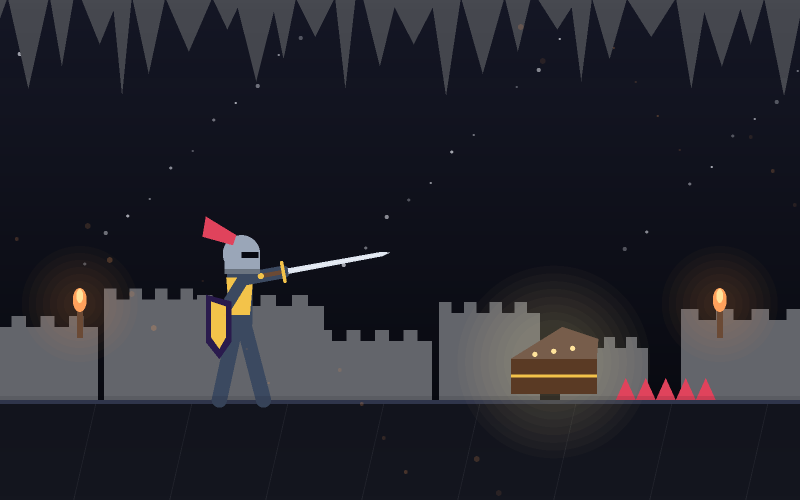
Treasure Hunt is the cleanest introduction: an open space, visible treasure, a clock, and traps that are easy to see and easy to avoid.
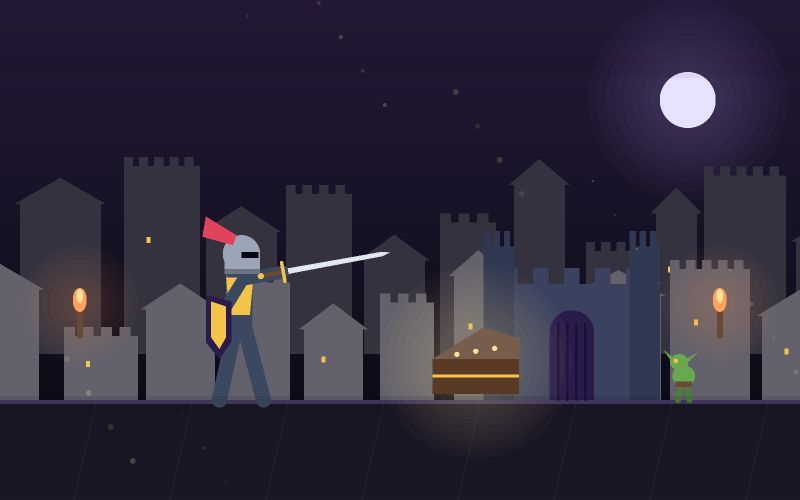
Knight Quest adds enemies worth fighting. Goblin Escape inverts the formula - you are the one being chased, and the treasure is on the way out rather than the way in. Dungeon Tunnel is the navigation test.
Underwater Kingdom Quest is the strangest of the group, because it changes how movement works: you drift, momentum carries, and the air gauge means standing still to think has a cost.
Tips for this category
- Decide your leaving point before you need it. Runs are lost by collecting one more chest, almost never by leaving one behind.
- Watch a patrolling enemy for one full cycle before crossing its path. The window is nearly always there.
- Remember junctions, not corridors. A maze is only confusing while you are tracking the wrong thing.
- Locked gates show how many keys they still want. Check the count before you go hunting for a key you already have.
- Guarded treasure is worth more than unguarded treasure. That is the whole reason it is guarded.
- In the underwater levels, stopping costs air. Plan the next move while you are still moving.