


About Fantasy Battle Games games
The bestiary, and why each creature exists
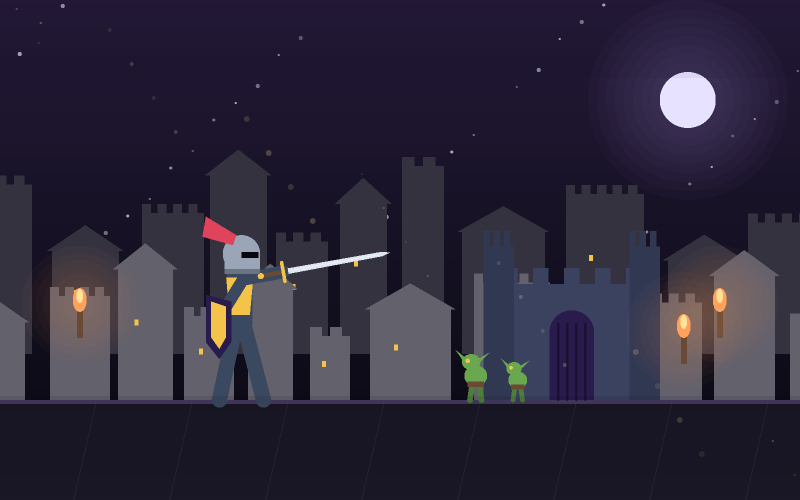
There are six creature types across the battle games and each one asks a different question. Goblins run straight at you, fast and fragile - they test pure reaction. Cave bats fly a fixed sine path that ignores you entirely, so they cannot be out-waited, only dodged or killed. Bog slimes hop, are defenceless between hops, and split in two when killed.
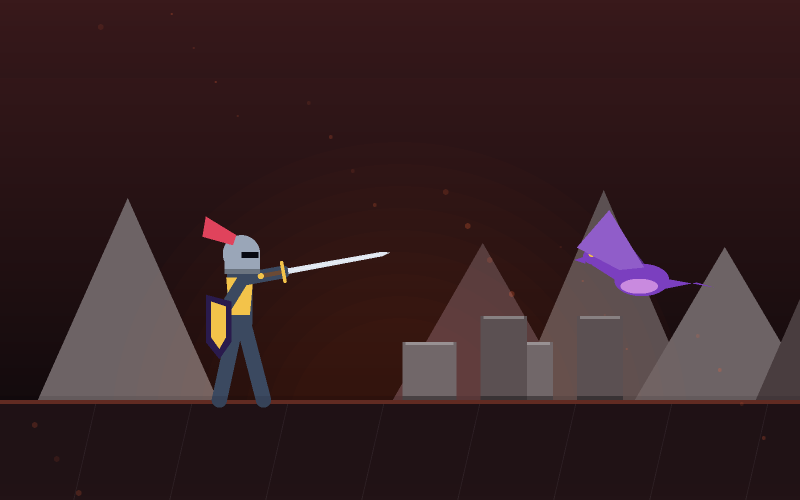
Wraiths drift straight towards you through everything, slower than a goblin but never taking a wrong route - they are a deadline rather than a threat. Stone golems take six hits and telegraph everything, so they test whether you can commit. Dragonlings hover at range and spit fire, which is the one thing that punishes you for standing still to fight something else.
A wave made of four of these asks all four questions at once, and that is the entire design of the category. The composition rules are strict about it: no wave opens with a creature you have not met, and there is never more than one ranged creature per two melee ones, because dodging while closing distance with no safe route is not difficulty, it is a guess.
Positioning: the skill the category is really about
Standing still in an arena always loses eventually, because the creatures arrive from the edges and standing in the middle means being surrounded from every side at once. Moving so that a crowd strings out into a line - so you are fighting the front of it rather than all of it - is a real technique, and it is usually worth more than any amount of attack speed.
The practical version is to keep moving along the edge of the arena rather than through the middle. A crowd chasing you round a circle arrives one at a time in the order they started, which is exactly the fight you want.
The exception is the defence games. In Castle Defender the thing being attacked does not move, so the technique inverts: you are trying to be between the crowd and the gate rather than away from the crowd, which means intercepting rather than kiting.
Combos, hit quality and what the score is measuring
Score in the battle games is not a count of kills. Every hit is graded on quality - a strike at the centre of its window is worth substantially more than one at the edge of it - and consecutive clean hits build a multiplier that resets when you take damage.
That means a careful short run frequently out-scores a careless long one, which is the intended behaviour. Avoiding a single hit is usually worth more to your score than landing three extra ones. Players chasing a personal best who only try to survive longer tend to plateau; players who try to take no damage at all usually break through.
The multiplier is shown live in the HUD along with your best combo for the run, so you can see the moment you lose it and, more usefully, see what you were doing when you lost it.
Where to start in this category
Sword Quest is the introduction: one creature type at a time, slow wind-ups, and a clear demonstration of how attack timing works.
Castle Defender is the defence variant and plays quite differently. Monster Escape flips the category on its head by removing your ability to fight at all. Dragon Treasure is the boss fight.
Fantasy Arcade Ultimate and Ultimate Fantasy Challenge are the end of the category and assume you have learned everything the others teach.
Tips for this category
- Move along the edge of the arena, not through the middle. A crowd chasing you round a circle arrives one at a time.
- Kill the dragonlings first. They are the only creature that punishes you for fighting something else.
- Slimes split when killed. If you are low on health, walk away from the big one rather than making two small ones.
- Golems telegraph everything and take six hits - only commit to one when nothing else is close.
- Not taking a hit is worth more to your score than landing three. The multiplier is where the points are.
- In the defence games, intercept rather than kite. The gate cannot run away from anything.