

About Fantasy Reflex & Skill Games games
Reaction and anticipation are different skills
Some of these games test reaction: something appears and you respond as fast as you can. Human reaction to a visual cue bottoms out somewhere around two hundred milliseconds, and there is not a great deal of improvement available past that point.
Others test anticipation: something is moving on a known rhythm, and you act at the moment it arrives rather than after you see it arrive. This has far more room in it, because you are not waiting for information - you already have it. Players who plateau in this category are almost always still reacting to games that want anticipation.
The practical difference is where you look. Reaction wants your eyes on the whole play area. Anticipation wants your eyes on the rhythm - and counting the beat out loud works considerably better than it has any right to.
Timing quality, and why consistency out-scores brilliance
Every timed action is graded on how close to the centre of its window it landed, and the falloff is symmetric: fifty milliseconds early and fifty milliseconds late score the same. That symmetry is useful information. If you are missing consistently in one direction, the fix is a single decisive adjustment rather than a gradual one.
Because the grading is continuous rather than pass-or-fail, a run of reliably close hits out-scores a run of occasional perfect ones separated by misses. This is the opposite of what most players assume, and it is the main reason scores in this category improve when people stop trying to be spectacular.
The combo multiplier compounds the effect. Consistency does not just score better per hit; it keeps the multiplier alive, which roughly doubles the gap.
Why the runs are deliberately short
Timing is learned through repetition with immediate feedback, which means the gap between an attempt and the next attempt matters more than the length of the attempt. A ninety-second run you can retry in two seconds teaches you far more per minute than a five-minute run you are reluctant to lose.
So every game in this category restarts instantly, keeps the previous score on screen, and never makes you sit through anything before the next attempt. There is no unlock, no cutscene and nothing to skip.
It also means these are the games that fit into the gaps in a day. A run of One-Tap Wizard fits in a lift.
Where to start in this category
One-Tap Wizard is the purest: one button, one window, nothing else.
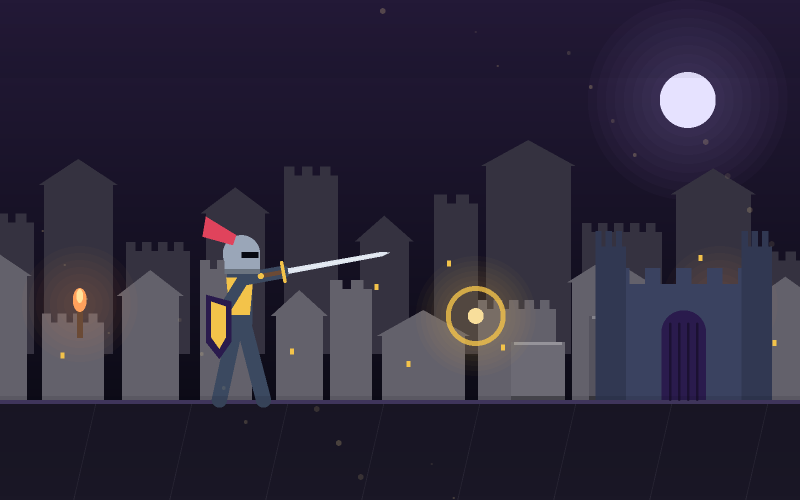
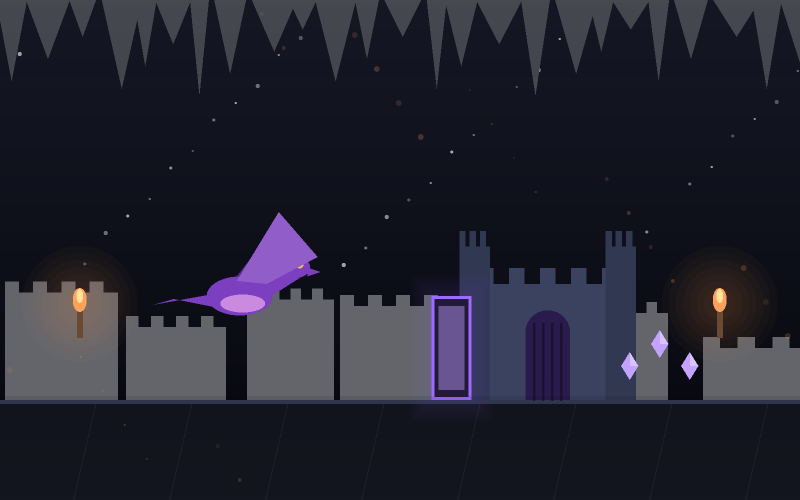
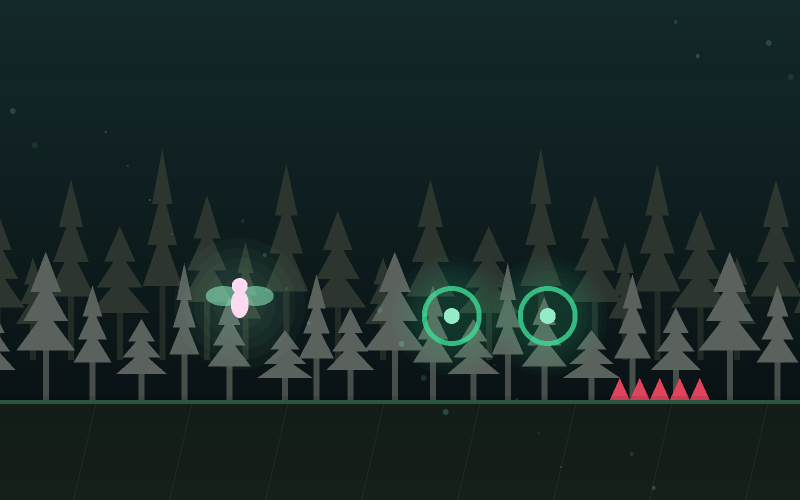
Fairy Flight and Dragon Rider add continuous control - you are holding a line rather than hitting a moment. Knight Rush and Wizard Run test reaction under a speed that keeps rising.
Endless Wizard Run is the endurance version and the place where the difference between reaction and anticipation becomes unmistakable.
Tips for this category
- Work out whether the game wants reaction or anticipation. Anticipation games reward counting the rhythm, reaction games reward watching the whole screen.
- Early and late score the same. If you are consistently missing one way, make one decisive adjustment rather than several small ones.
- Consistency beats brilliance - the scoring is built to reward it, and the combo multiplier roughly doubles the gap.
- Take the retry immediately. The gap between attempts matters more than the length of the attempt.
- If your reaction time has stopped improving, move to the anticipation games. That skill has far more room in it.
- These are the best games on the site for a phone. Most need one thumb and nothing else.